Quick answer: Several companies run fast boats from Sanur to Lembongan from early morning to late afternoon, and the crossing takes about 30 to 45 minutes. Most land on the beach, so you wade ashore; a few use a private pier. Choose a morning boat for calmer water.
The crossing from Sanur is short and well run, and plenty of companies make it. Prices and boats are similar; what actually differs is the time, where you land, and how much you'll get wet. Here's how to choose. For the basics of the journey, start with how to get to Lembongan.
Departure times
Boats leave Sanur from roughly 8 am to about 5 pm, with most companies running two to four departures a day and the busiest slots in the morning. Return boats from Lembongan run on a similar pattern, with the last ones back to Sanur in the late afternoon. Exact times differ by company and season, so check the timetable when you book.
Choose a morning boat if you can: the sea is usually calmer, and you get the whole first day on the island. If you're flying home the same day, don't take the last boat back. Better still, leave the day before.
Wet or dry landing
| Wet landing (most boats) | Dry landing (a few) | |
|---|---|---|
| Where | On the beach, usually at Jungutbatu or Mushroom Bay | A private pier |
| Getting off | Step off the back into ankle to knee-deep water | Walk off onto the jetty |
| Best for | Most travellers, light packers | Older travellers, small children, limited mobility, heavy luggage |
Sanur's departures can also mean wading out to the boat, depending on the company and the tide. If staying dry matters to you, ask specifically about both ends when you book.
Where you land matters
Boats land at different points on the island. Pick one that lands near where you're staying, or check that your accommodation will collect you. The areas compared.
Luggage
Allowances vary, so check when you book. The crew loads bags onto the boat and passes them ashore; on the beach they may be stacked on the sand. Spray can reach bags on deck or at the front, so pack electronics in a dry bag or a plastic liner, and keep your phone, passport and cards on you. A backpack or soft bag beats a wheeled suitcase on sand.
Seasickness
On a calm morning the crossing is smooth. In the afternoon, or in the wet season, swell of a metre or more can make it bumpy. If you're prone to seasickness, take a morning boat, take a tablet beforehand if you use them, sit at the back where the motion is gentlest, and look at the horizon. Rough weather can delay or cancel crossings.
Pickups and check-in
Many tickets include a shared pickup from south Bali hotels, sometimes with a surcharge for further areas. Check-in at Sanur is usually 30 minutes to an hour before departure, where you swap your booking for a boarding pass or sticker. Keep it: you may need it for the return.
What happens on arrival
The boat noses into the beach and the crew signals when to step off. Wait your turn, hold the rail, and keep your hands free. Your bags come off after you. Depending on how the island levy is being collected, you may be asked to show or buy your ticket. Then it's a short walk, or an open taxi truck, to where you're staying: agree the price first if it isn't pre-arranged. The fees explained.
Booking
Outside the busy months you can often book a day or two ahead. In July, August and around Christmas and New Year, book earlier, and expect some companies to add a peak surcharge. Return tickets are usually a little cheaper than two singles. What it costs.
Questions
How long is the fast boat from Sanur to Nusa Lembongan?
About 30 to 45 minutes, depending on the boat and the sea. Allow time before for check-in, usually 30 minutes to an hour.
What is a wet landing on Nusa Lembongan?
Most boats don't have a pier, so they nose into the beach and you step off the back into water that can be ankle to knee deep. A few boats use a private pier, so you stay dry.
How much luggage can I take on the fast boat to Lembongan?
Allowances vary by company, so check when you book. A normal suitcase or backpack per person is usually fine; the crew loads it for you. Soft bags are easier on the sand than rolling suitcases.
When is the sea calmest between Sanur and Lembongan?
Usually in the morning. The wind tends to pick up in the afternoon, and the crossing is often rougher in the wet season, roughly November to March.
Header photo: Imadedana, CC BY-SA 4.0, via Wikimedia Commons

More guides
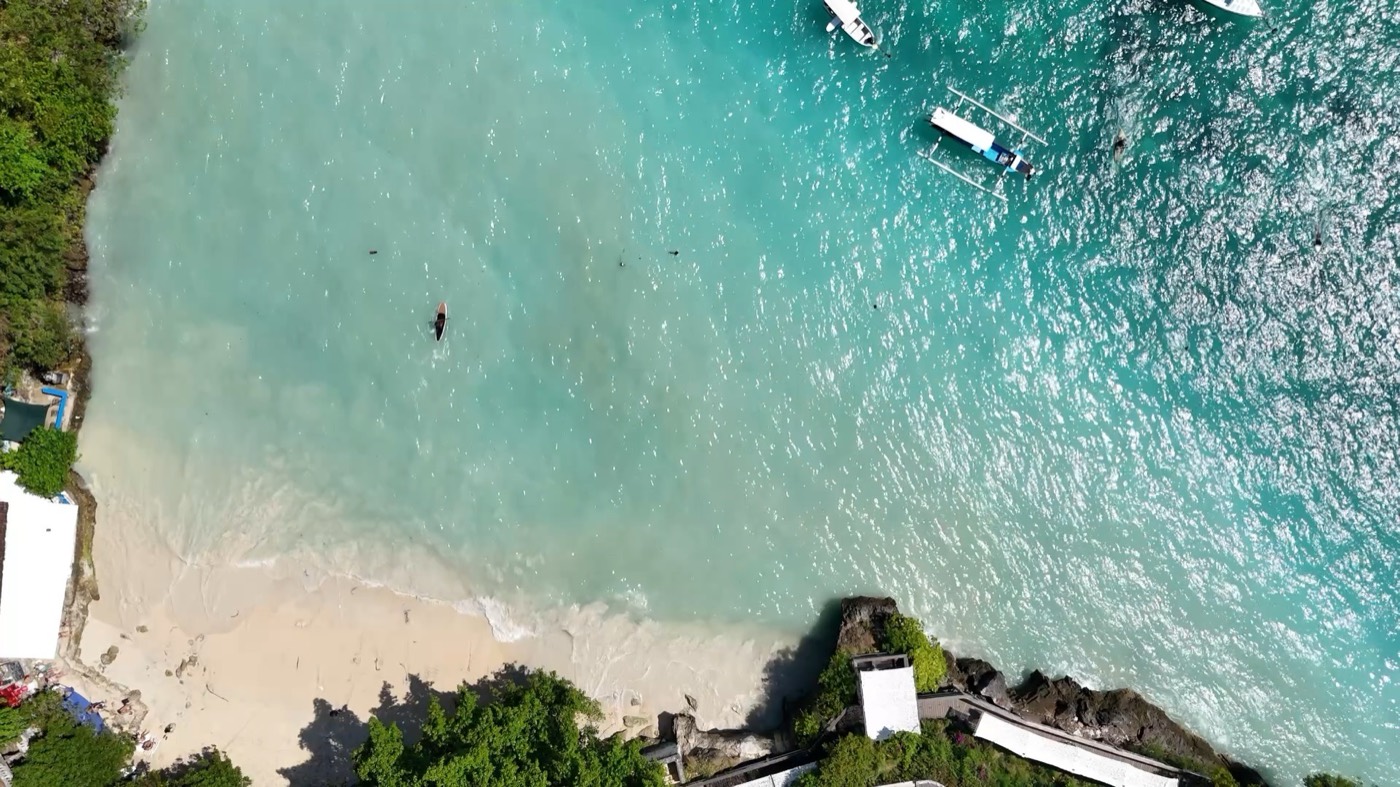 Things to doTwelve ways to spend your days on the island, from the reef to the cliffs, and the tide that decides which to do when.
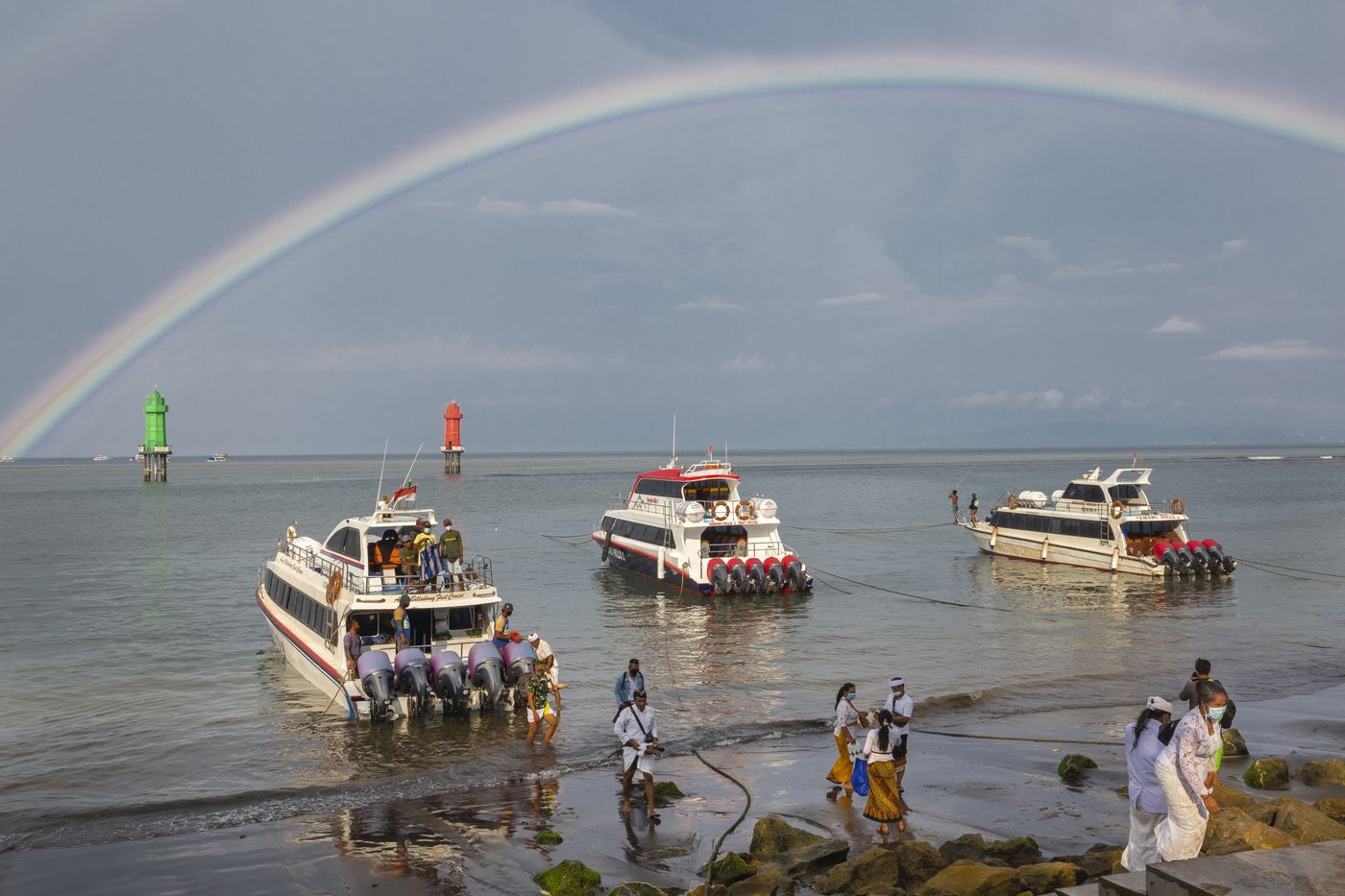 Getting thereFast boats from Sanur cross in about half an hour and land on the beach.
- Fees and tourist taxTwo levies, one for Bali and one for the Nusa islands, plus a few small tickets.