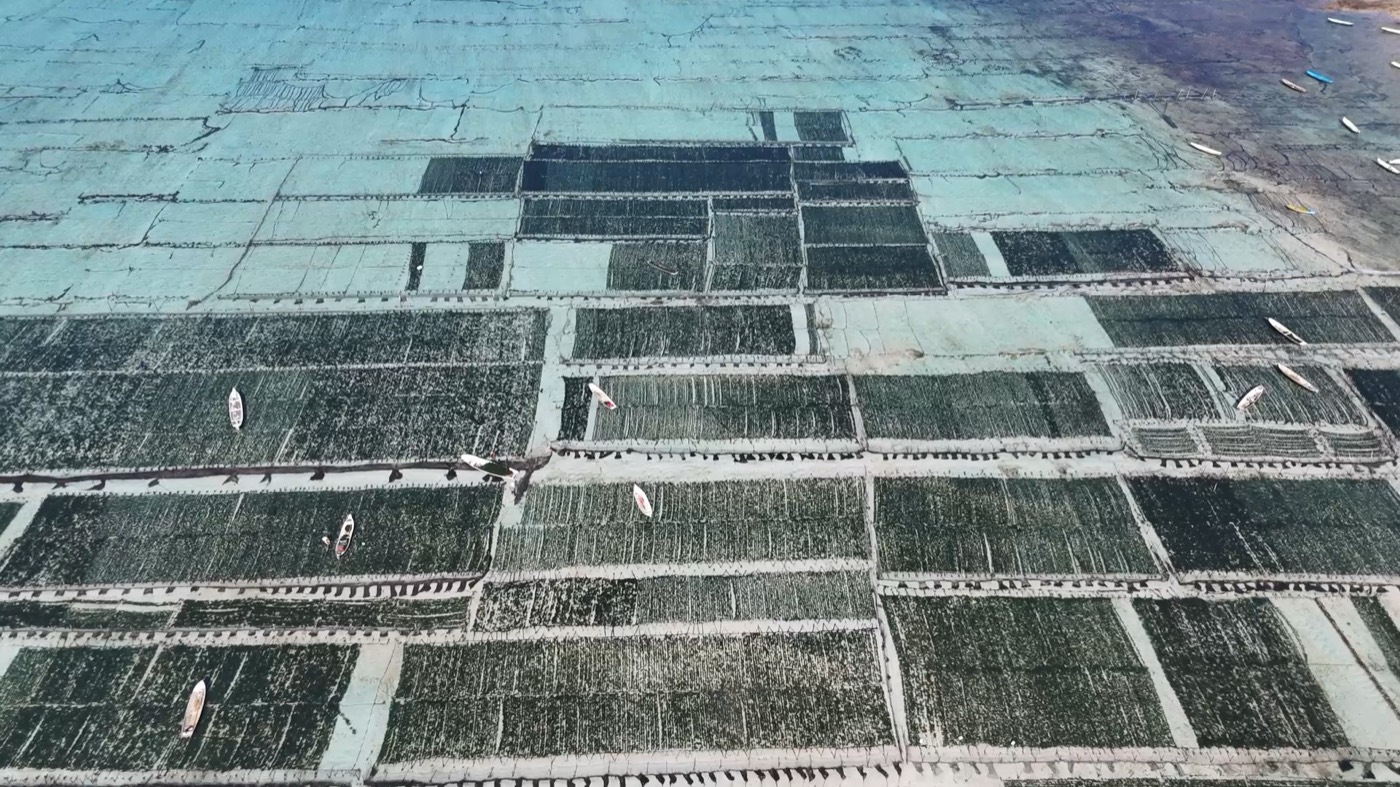
Quick answer: Go at a morning low tide and look along the channel between Lembongan and Ceningan, from the Yellow Bridge or the Ceningan shore. The seaweed is mostly sold for carrageenan. Don't walk on the plots.
For a long time, before the boats full of visitors, many families on Lembongan and Ceningan lived from seaweed. It still matters here, and it's one of the most beautiful things to see on the island.
How it works
Farmers plant small cuttings of seaweed on lines tied between stakes in the shallow, sheltered water between the islands and along Lembongan's coast. The tide does the rest: seawater washes nutrients through the plots twice a day. At low tide the farmers walk out to tend the lines, clean them and, when the seaweed is grown, harvest it.
The harvest is spread out to dry in the sun, on tarpaulins and on the ground, and then sold on. Most of it isn't eaten as it is: it is processed into carrageenan, a natural thickener used in foods, toothpaste and cosmetics around the world.
Where and when to see it
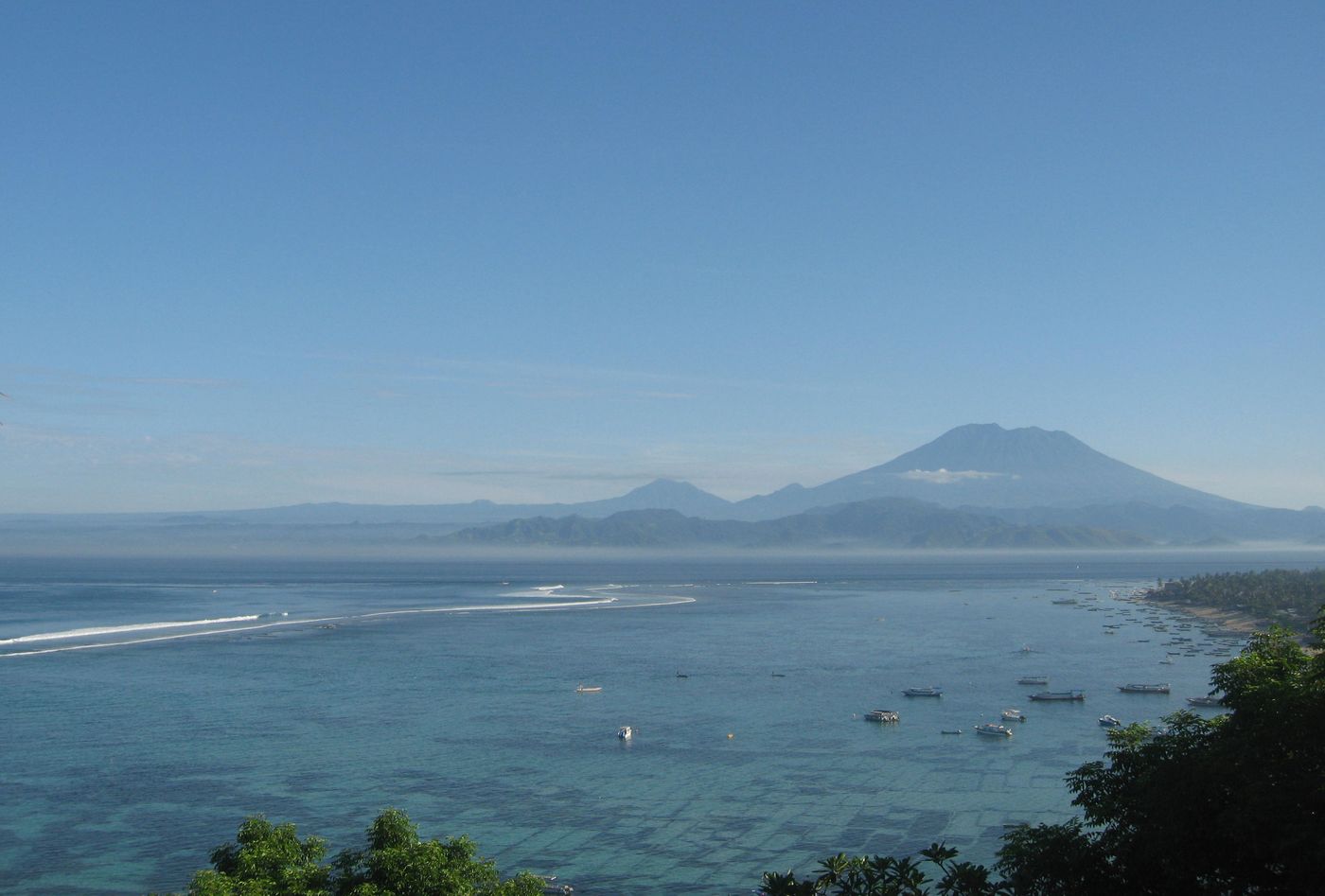
Come at a morning low tide, when the plots are uncovered and farmers are out working. Good places:
- From the Yellow Bridge, looking along the channel.
- The Ceningan side of the channel, where drying racks often line the road.
- From the air: the plots make the patchwork you see in the film on the home page.
Check a tide table before you go. At high tide the plots are under water and there's not much to see.
An industry that changes with the island
As tourism grew, many families moved into boats, guesthouses and restaurants, and by the late 2010s seaweed farming had nearly disappeared. When the visitors stopped during COVID, families went back to the water and the plots returned. Since tourism came back, fewer are farmed again. What you see today is a working farm, not a museum.
Questions
When is the best time to see the seaweed farms?
A morning low tide, when the plots are uncovered and farmers are out working. Check a tide table first.
Where can I see seaweed farming on Lembongan?
From the Yellow Bridge and along the channel between Lembongan and Ceningan, where seaweed is often dried by the road.
What is the seaweed used for?
Most of it is processed into carrageenan, a natural thickener used in food, toothpaste and cosmetics.
Can I walk on the seaweed farms?
Please don't. The plots are people's livelihoods. Watch from the shore or the bridge, and ask before photographing people at work.
 Surfing
 Lembongan or Penida
 How many days